

Top 5 Mixtapes That Saved My Ears (And Wrecked My Bank Account)
Let’s keep it 100: being born in ’80 means growing up on the best Hip-Hop while rocking some straight-up trash haircuts. Back in the mid-90s, long before any kid could DL Jay-Z’s whole discography in two clicks, we had a real problem: we were broke. And when you’re skint, you don’t just cop an album because the cover looks fly.
That’s where mixtapes came in. They were our evening news, our social feed, our Bible. We flipped tapes like they were contraband. Names like Mr. Cee, Tony Touch, or Doo Wop sounded like living gods. On the French side, we had DJ Clyde or Cut Killer reminding us that, yeah, we knew how to work a crossfader without catching our fingers.
These tapes literally carved out my DNA as a DJ. They taught me that tracklisting is a science, and that the flow of a mix is worth more than any corporate FM station that sold its soul. Here are 5 gems that survived multiple moves and the test of time.

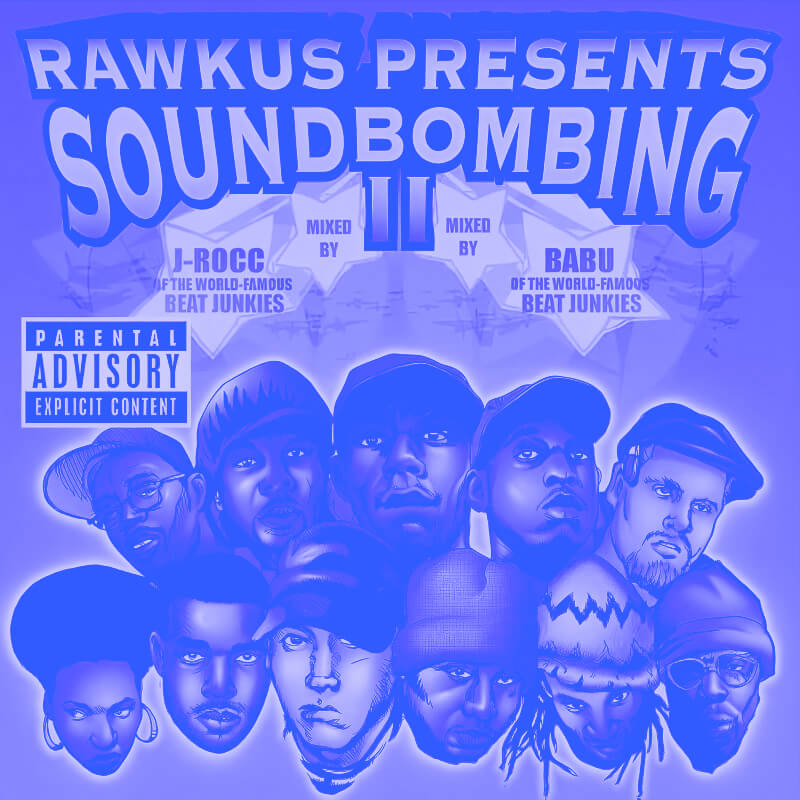
5. The Beat Junkies – Soundbombing II (1999)
Starting things off easy with the tape that was basically the official soundtrack for every tape-head back in ’99. We’re talking East Coast vibes mixed by the West Coast, heading straight for Rawkus.
This tape tastes like freedom, fresh paint on your fingers, and all-nighters spent dodging the cops. In ’99, I’m 19, miraculously graduated, decks in my bedroom, and finally starting to blow all my cash on vinyl instead of useless stuff like, you know, eating.
The keys to the truck were handed to The Beat Junkies, with Babu and J-Rocc at the wheel. If you don’t respect these dudes, you just don’t get the concept of “turntablism.” When it comes to DJing, they’ve got nothing left to prove: the cuts, the juggles—it’s pure value-add on every transition. It’s high art, period.
The Reality Check: Let’s be real for a sec, now that the nostalgia has cooled off. It’s a pre-2000 vibe, and weirdly enough, some tracks have aged like milk. It’s funny, but stuff from ’94 sometimes sounds fresher than certain joints on here that feel like a yogurt left out in the sun. Rawkus was the elite, but with hindsight, a few tracks kind of sting the ears.
But hold up, there are untouchable monuments in there. If I had to pull two clips that still hit like an uppercut, it’s Sir Menelik on 7XL (a flow from another galaxy) and the unhinged R.A. The Rugged Man on Stanley Kubrick. The dude is a straight-up maniac, but he’s a genius. Just for those two, the tape belongs in a frame. This was the era when indie felt like it had wings, right before Ja Rule showed up. A beautiful end to an era.

4. DJ Premier – NY Reality (1997)
Now we’re stepping into the arena with the heavyweight, the boss, the man whose name makes any MPC tremble: DJ Premier. Check your neck, it’s about to get bumpy.
“Preemo” needs no introduction. If you don’t know who he is, stop reading right now, log off, and go do your homework. In 1997, he was at the top of the food chain, and he dropped NY Reality—a deep dive into a New York that smells like the subway and hot asphalt.
The Reality Check: Before we talk about the sound, we gotta talk about the awkwardness. Why, by all that is holy in vinyl, is this tape branded “Haze Presents“? Yeah, we’re talking about Eric Haze. The guy who turned a few tags into a commercial empire to sell t-shirts to dudes who’ve never touched a Montana can in their lives. I don’t know his connection to Premier—maybe he did his groceries or sorted his mail—but he’s the one who put the project together, so credit where it’s due.
Thanks to Haze’s flair (or his Rolodex), this tape got a top-tier CD pressing. It was one of the first to get massive exposure. We went from hissing cassettes to shiny CDs, all with the seal of quality from the NY underground. It was clean, it was pro—almost too pro for guys living in the grime.
Tracklist-wise, it’s a total heist for indie 12-inch collectors. You’ve got bangers like Change by Shadez of Brooklyn or Break It Down by Brainwash. But the real showstopper, the thing that still traumatizes me 25 years later, is Rezidue with Inner City Blues. If that track doesn’t make your head nod, you’re clinically dead. Premier does what he does best: lets the tracks breathe, drops his signature scratches, and reminds us that NYC is the world capital of the kick-snare.

3. DJ Three – The Battle Zone (1996)
Alright, now we’re talking for real. Put away the colorful covers; we’re moving into the serious stuff—the kind that smells like a holding cell and overheating needles.
Let’s be honest: if you tell me you know DJ Three inside out, you’re either a world-class liar trying to look cool at a party, or you spent your nights doing Hip-Hop archaeology in damp basements. The guy is so underground he sounds like he recorded his mixes in a nuclear bunker.
Three was part of the X-Ecutioners galaxy (the X-Men for the real ones), the crew that turned scratching into a martial art. For The Battle Zone, he brought Total Eclipse for a feature. All of Three’s mixes are calibrated the same way: a selection of indie heat mixed with love.
The Reality Check: We don’t mess around with the crossfader here. DJ Three doesn’t mix with his elbows. It’s pure technique—rapid-fire cutting, millimetre-perfect beat juggling, and cuts that remind you DJing is a combat sport. It’s less “artistic” than some conceptual tapes; no fluff, no three-minute jingles. It’s raw for the heads who still have calluses on their fingertips from scratching. This tape taught me one thing: digging for indie gems is good, but when it’s mixed with the precision of a caffeinated neurosurgeon, it’s better.

2. JR Ewing – Pure Premium (1999)
Before he became the DJ everyone names to sound “in the know,” this guy went by Oeno. A writer, a real one, who launched Arsenal Records and dropped the first EP by La Cliqua (an impact equivalent to Midnight Marauders over here).
What made JR Ewing insufferably brilliant was his marketing sense for the initiated. He didn’t just toss you a dusty tape with a Sharpie-scribbled title. No, he gave you an object with a concept, artwork that made you feel like part of the inner circle, and jingles that reminded you every second that you were listening to the heavy hitters.
Pure Premium in 1999 was the password to a VIP party. If you lived in the middle of nowhere with no internet and no access to the record shops in Paris, this tape was your only link to the real world. JR dug up US indie tracks so obscure that even the rappers on the record probably forgot they recorded them.
The Harsh Truth: We gotta talk about his hands. If you’re looking for plastic surgery on the decks or transitions smooth as spring water, you’re at the wrong shop. Technically, JR Ewing was… “approximate” at times. Sometimes it sounded like he was finishing a sandwich between two tracks. But honestly, we didn’t care. We didn’t buy Pure Premium for a virtuoso performance; we bought it for the selection that made you smarter than your neighbor.

1. DJ Pump – Golden Era (2000)
Shift gears. Leave the dusty NYC basements and take a direct flight to Canada. If the last two were snacks, this is the main course—the one that gives you talent-indigestion.
We’re touching the sacred here. My favorite mixtape, the one I’d save if my apartment was on fire. For anyone who thinks Canada only produces maple syrup and pop divas, wake up: DJ Pump is the guy who robbed the game when he hit the DMC World Finals in 2000. At this level, he isn’t just playing records; he’s performing sorcery.
Golden Era, released in 2000, is a masterpiece. The concept? A concentrate of early 90s classics put through the shredder by one of the best technicians on the planet. It’s the kind of tape that makes you want to sell your decks on eBay by the fifth minute because the skill level is just indecent.
The Reality Check: Yeah, the “Sunday Purists” will cry plagiarism because Pump took very heavy “inspiration” from Vinroc’s Re-construction (1998). But chill out. Pump took Vinroc’s skeleton and added muscles. The intros to T.R.O.Y. or Shiftee are so chopped up it feels like the songs were rewritten live.
He doesn’t waste time: he cycles through tracks at lightning speed, rarely staying on a song for more than 90 seconds. And that’s where you finally understand why my own mixtapes are mixed like I have a train to catch every two minutes: he’s the influence. It’s clean, it’s violent, it’s genius on a magnetic strip.

Chef’s Bonus: JR Ewing – Metro Veteran (1997)
I know, I already poked fun at his technical skills, but we can’t talk about the DNA of French mixtapes in the 90s without Metro Veteran. This is the vandal’s Bible.
The title isn’t for Instagram clout. The concept is: a mixtape by a graffiti writer, for graffiti writers. Period. Oeno (JR Ewing) gave us an ode to the train yards, the chrome paint, and the adrenaline. The cover is packed with photos of walls and panels by him and the GT (Grim Team). Just looking at it, you can smell the rail dust and the solvent.
The Reality Check: Selection-wise, JR didn’t strain himself looking for total obscurity this time, but he hit the bullseye. It’s pure thematic fuel. He pulls out classics like KRS-One’s Out For Fame—the kind of track that makes you want to go bomb a commuter train the second the hook drops. It’s not cutting-edge musical research; it’s pure motivation to go take unnecessary risks.
If you’ve never listened to Metro Veteran while shaking a spray can, did you even really live through the 90s? I’m not so sure.